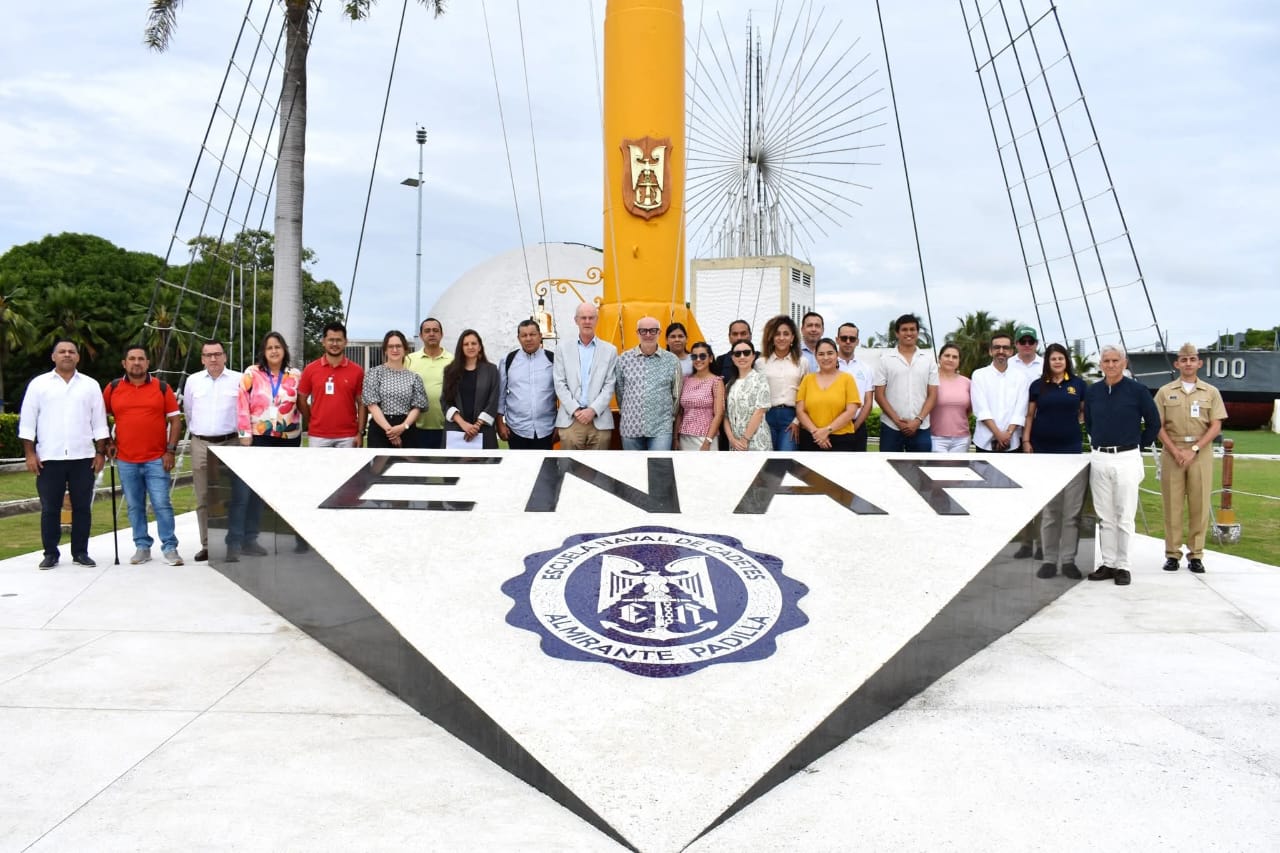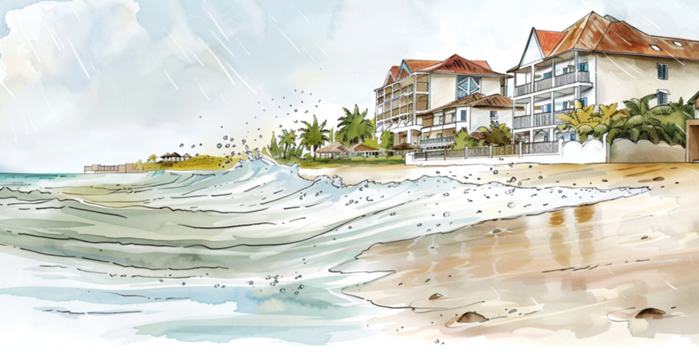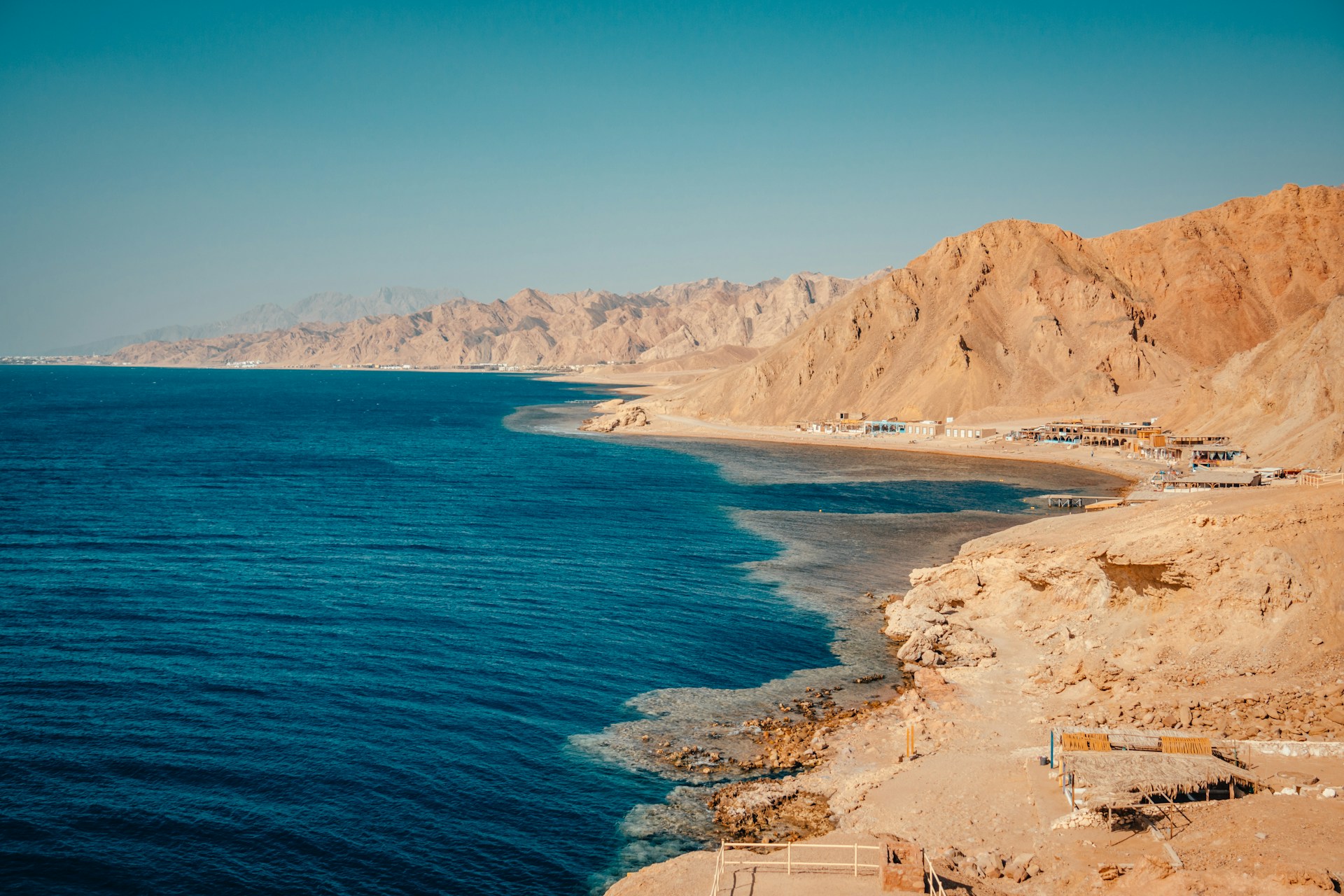
An IPDC roundtable brought together practitioners and experts in coastal engineering, reef ecology, economics, and international policy to discuss the implementation of Nature-based Solutions (NbS) for climate adaptation. The session focused on technical knowledge gaps, financial and institutional barriers, and the importance of inclusive governance.
Featuring a range of experts, their key messages included:
Bas Huisman
Hydraulic engineer with 19 years of experience in the field of coastal morphology and a focus on climate adaptation
- Regional scale sediment management is key to success for sandy NbS. This requires a solid systems understanding of the processes affecting the coastal sand budget.
- Hard measures can have adverse impacts, are difficult to adapt to climate change, and are not necessarily cheaper.
- Data analyses and numerical modelling are essential for assessing impacts of Nature-Based-Solutions, because well-informed decisions can only be made when the outcomes are clear.
Floortje Roelvink
Coastal researcher specialising in the modelling of extreme events and their impacts on reef-lined coasts
- Reef coasts are not sandy coasts; wave and water level dynamics on reefs are fundamentally different, so we cannot translate knowledge of sandy systems and their NbS directly to reef coasts.
- Knowledge gaps limit scaling. We lack data on the long-term and large-scale performance of artificial and restored reefs as NbS.
- Management before restoration: Reef health is critical; restoration must follow strong protection and management.
Robert Proos
Policy advisor specialising in international water management and climate adaptation, with a focus on developing inclusive and innovative city-scale interventions through bilateral programs.
- There is a lot of attention and budget for the implementation of projects, but investments in the process and inclusion of communities is often lacking.
- Organising an inclusive process is not easy, but at the same time it is a requirement to ensure the solutions are embraced by, and enriching for communities, private sector and local governments.
- By focusing on the process, next to technical solutions, financing schemes and governance arrangements, more trust in, and support for NbS can be generated amongst communities, governments and other stakeholders required for successful implementation.
Wesley van Veggel
Researcher and advisor in environmental economics, focusing on integrating economic analysis into climate adaptation and mitigation strategies, emphasising the value of ecosystem services and natural capital
- Cost of doing nothing: Public goods like clean air, flood protection, and biodiversity don’t show up on balance sheets, but their absence certainly does. Inaction isn’t free.
- Quantification turns ambition into action we need clear, credible data on how NbS impact ecosystem services, who benefits, and how society is affected.
- Financial governance is key to organising how value is defined and shared in Nature-based Solutions. It can help align stakeholders, pool resources, and build the trust needed to unlock long-term investment.
Takeaways from the interactive discussion
Definition and scope of Nature-based Solutions (NbS)
- NBS is a broad concept, encompassing both natural and artificial elements that work with natural processes (e.g., artificial reefs as grey NBS).
- Whether a solution qualifies as NBS depends on how it interacts with nature and its benefits, not just its material composition.
Effectiveness and application of NbS
- Artificial reefs can provide coastal protection but may not always support biodiversity or ecosystem services fully.
- Projects often involve a combination of grey and green solutions rather than purely one or the other.
Financial and institutional barriers
- NBS implementation is hindered by limited access to public funds and complex climate finance mechanisms.
- Private sector involvement is minimal; financial tools like green bonds, carbon credits, and tourism user fees offer some potential but are underutilised.
Challenges compared to grey infrastructure
- Grey infrastructure has a proven track record and is more trusted by engineers and stakeholders.
- Perceived risks, lack of long-term governance, and community resistance delay NBS adoption.
- Grey solutions appear cheaper locally, but NBS are often more cost-effective at larger scales.
Technical and knowledge gaps
- Limited system understanding and lack of comprehensive coastal management frameworks are major bottlenecks.
- There is uncertainty in outcomes of NBS, and existing models are still evolving.
- More research is needed into feedback loops (e.g., sand nourishment → seagrass → coral) and eco-hydraulics, but in our experience sand nourishments (e.g. for land reclamation were harmful for the surrounding coral reefs). Therefore, it is important to model and monitor these impacts.
Changing mindsets and decision frameworks
- Resistance to NBS often comes from engineers and local stakeholders who favour familiar grey solutions.
- Overcoming this requires evidence from pilot projects, modelling, and changing decision-making frameworks to better handle uncertainty.
Monitoring and maintenance
- Monitoring of NBS (e.g., the Sand Engine in the Netherlands) focuses on morphological changes, often using drone and satellite imagery.
- In-situ hydrological monitoring is limited, and more comprehensive techniques are needed to guide maintenance.
Conclusion
The roundtable made it clear that Nature-Based Solutions are complex, context-specific, and deeply interdisciplinary. Technical knowledge, inclusive governance, and financial innovation must go hand in hand. For NbS to move from pilots to practice, we must shift from siloed projects to systemic thinking — grounded in data, designed with communities, and driven by a clear understanding of the value that nature brings.
Speakers
A huge thank you to our speakers and moderator:
- Bas Huisman, hydraulic engineer, Deltares
- Floortje Roelvink, coastal researcher, Deltares
- Robert Proos, environmental economics expert, RVO
- Moderator Nishchal Sardjoe, IPDC Country Coordinator, Deltares