A new training programme, aimed at understanding and managing coastal erosion, has been launched in Colombia. The course, aimed at government officials, will provide comprehensive technical training on Integrated Coastal Zone Management (ICZM). Funded by the IPDC, the course is being offered in cooperation with the Colombian Ministry of Environment and Sustainable Development. The course is led by IHE-Delft and includes contributions from Deltares, Wageningen Marine Research , and several Colombian governmental organizations and universities.
Coastal erosion: an urgent threat
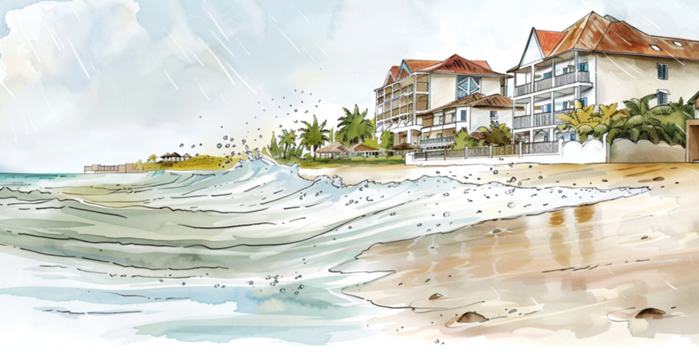
A member of the IPDC since its launch in 2023, coastal erosion represents one of Colombia’s most urgent socio-environmental threats to its coastline. This threat is exacerbated by the challenges resulting from sea level rise, climate change, and anthropogenic pressures.
Following national consultations, Colombia identified the need to strengthen the technical capacities of national, regional, and local actors in modelling and monitoring for environmental risk reduction and adaptation to the changing climate in Colombia’s marine-coastal zones.
Diploma programme
To strengthen these technical capacities, a new modular programme has been launched. Aimed at government officials, the course focuses on coastal erosion governance, risk management, and the technical tools needed to project and evaluate adaptation measures.
The diploma programme will contribute to Colombia’s national climate action goals, including the National Environmental Policy for the Sustainable Development of Colombia’s Oceanic, Coastal, and Island Areas, and the Master Plan for Coastal Erosion.
Participants
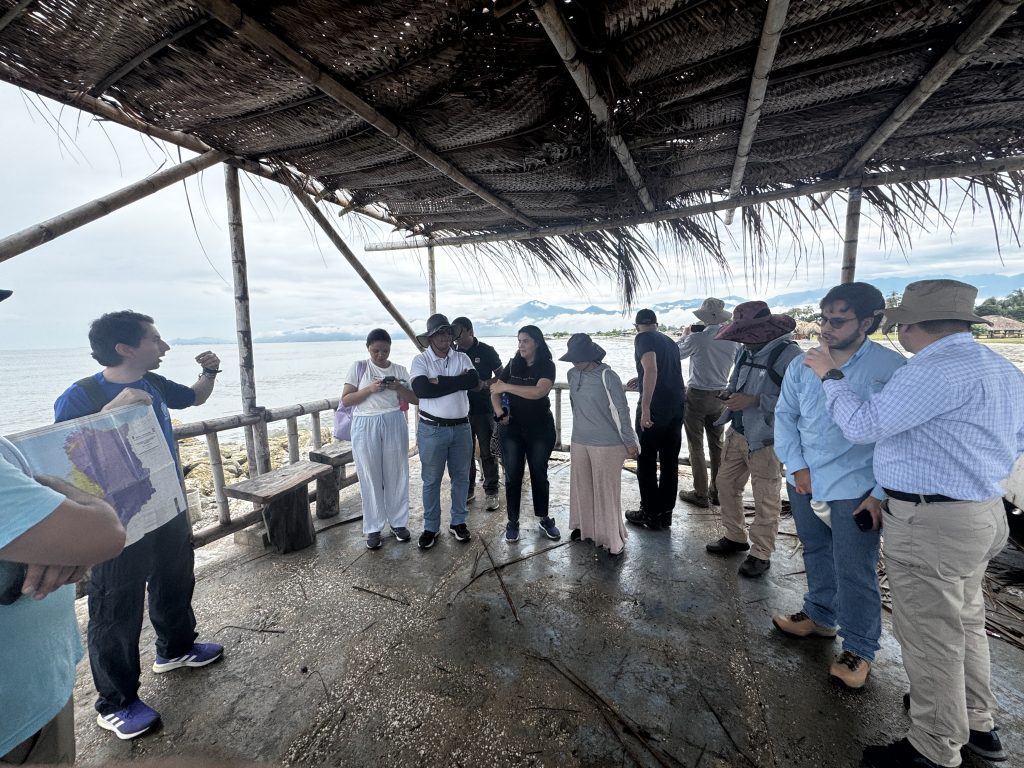
Throughout November and December, 70 government officials from 37 institutions have taken part in activities across the country, including in Bogotá, Santa Marta, and Cartagena, strengthening local capacity. In 2026, additional modules will be taught again in a hybrid format, with online and on-site trainings.
Participants are able to choose between two complementary training tracks. A track aimed at decision-makers will strengthen decision-making capacity for climate adaptation, planning and coastal governance. A second track is aimed at technical modelling, and centres on coastal modelling, shoreline dynamics, sediment transport, and scenario evaluation.
Modules
To build technical capacity across a wide range of areas, the diploma programme consists of five modules:
- Governance and public policies: focussing on the institutional, regulatory, and programmatic framework guiding territorial and environmental management of coastal areas in Colombia.
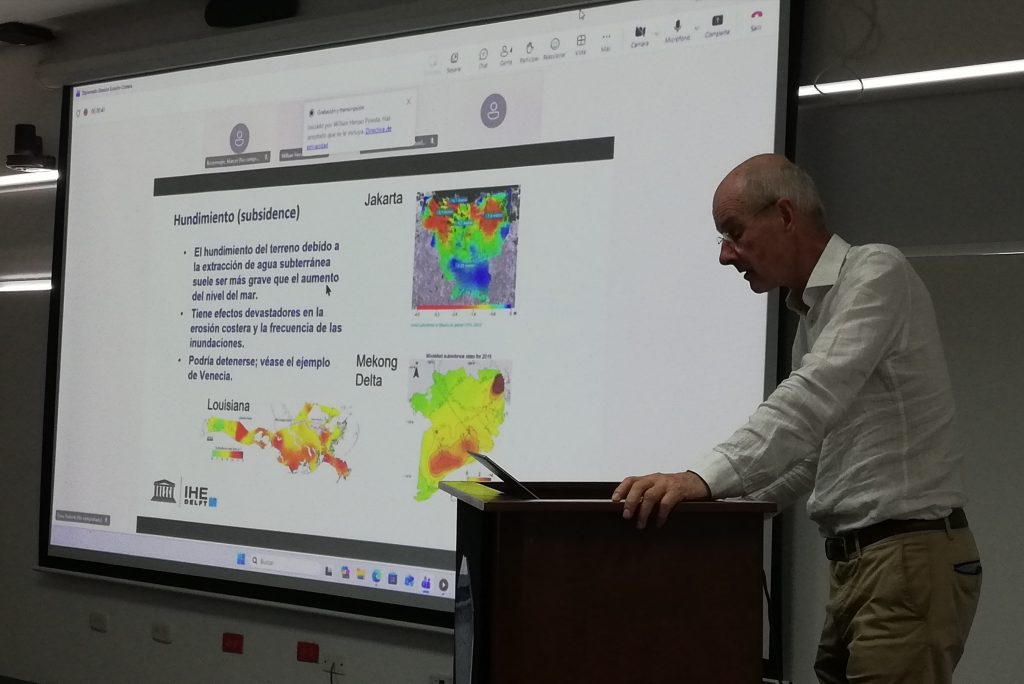
- Modelling and monitoring: Fundamentals of coastal modelling and dynamics: providing participants with a common foundation in coastal dynamics, erosion processes, and modelling tools so they can understand and use their results as input into adaptive planning.
- Protected Areas and Public Use Goods: discussing ecosystemic and legal approaches to the conservation, restoration, and governance of protected marine-coastal areas.
- Risk Management and Adaptation: considering the processes for assessing, preventing, and responding to risks arising from coastal erosion and extreme phenomena.
- Advanced Modelling: strengthening a technical group that will act as trainers for the TRAINCOAST diploma, ensuring the replicability and sustainability of knowledge through a network of trained instructors capable of training at least 60 people.
Partners
The IPDC has provided financial backing for the diploma programme. Modules are offered by IHE Delft, Deltares, Wageningen University & Research, UNGRD, PNN, DNP, MinAmbiente, and the University of Cartagena. The programme is supported by the Colombian Ministry of Environment and Sustainable Development.