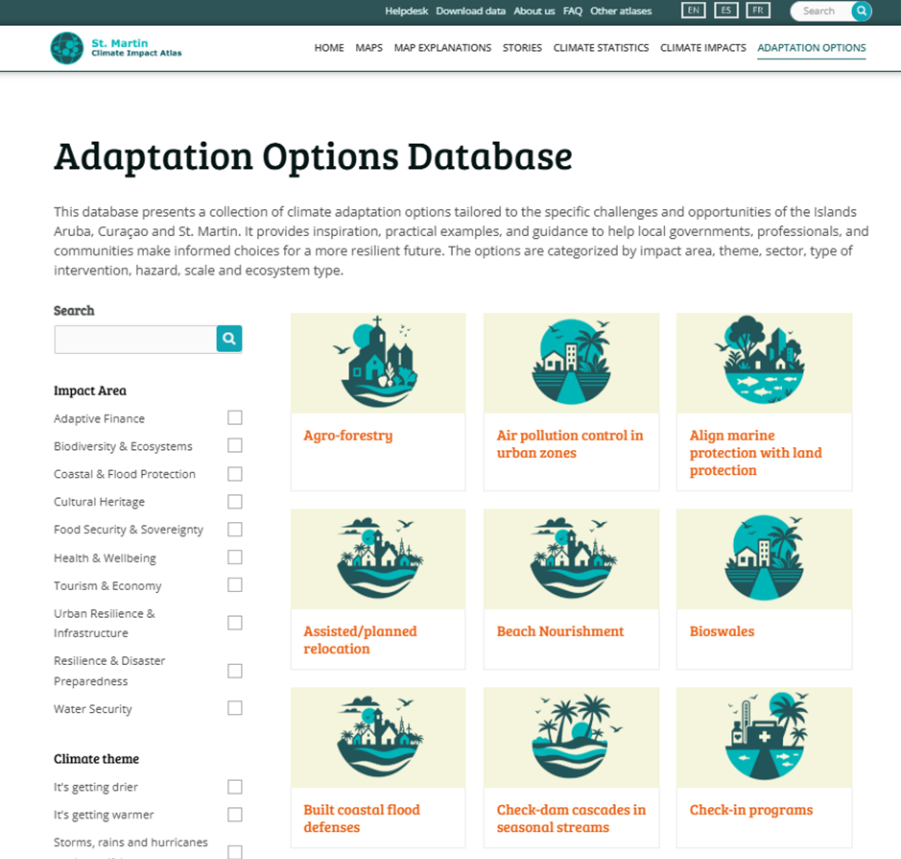
This project delivered a comprehensive and publicly accessible database of climate adaptation options for the Dutch Caribbean. The database supports Aruba, Curaçao, and St. Martin in advancing their national adaptation strategies by providing a structured, island-relevant overview of feasible adaptation measures.
The project builds directly on earlier IPDC investments in climate scenarios and climate impact atlases and translates those analytical foundations into practical decision support. It is the result of a close collaboration between universities in the Dutch Caribbean and a consortium of regional and international knowledge partners, ensuring scientific robustness as well as local ownership.
Background and rationale
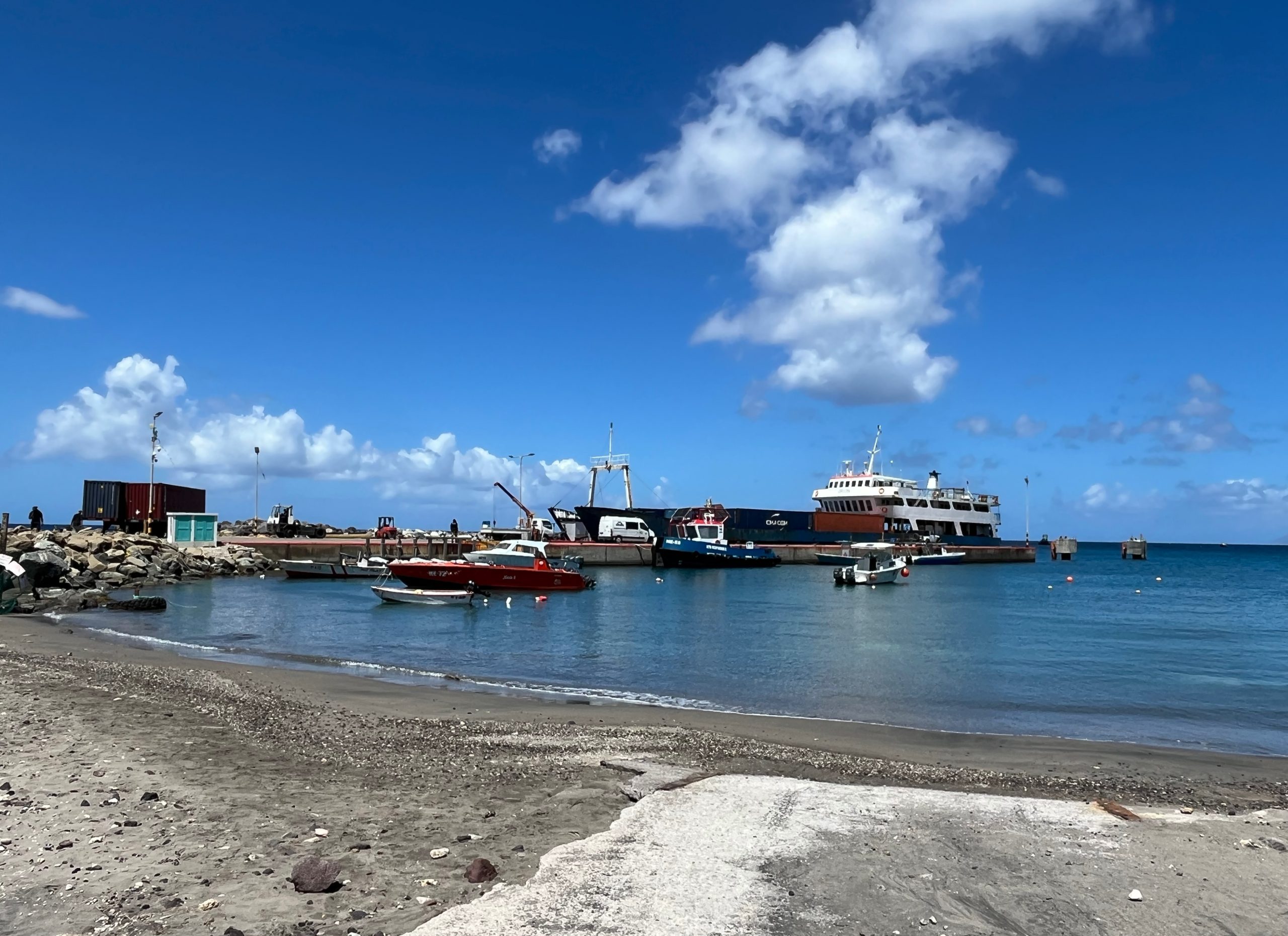
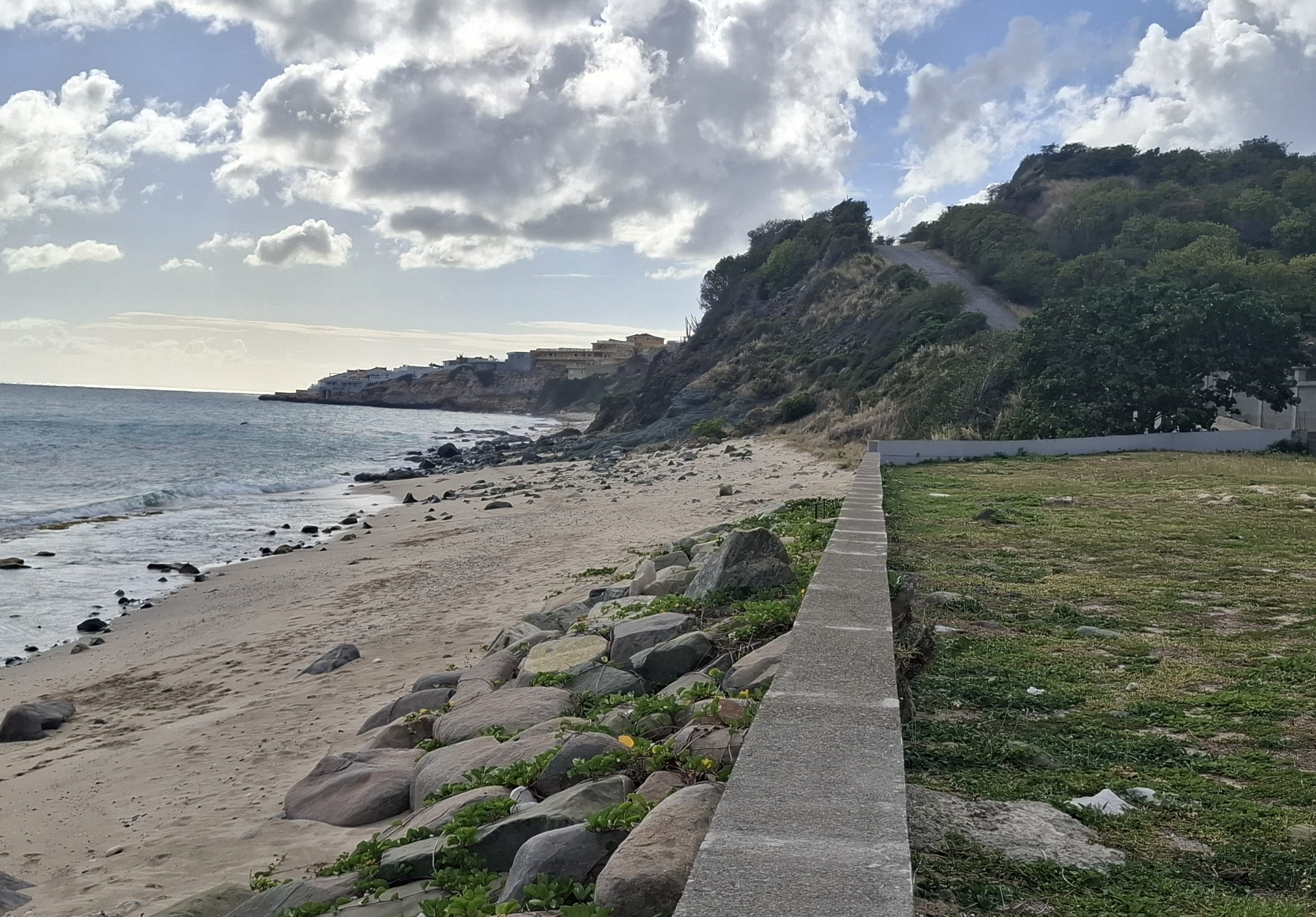
The Dutch Caribbean is already experiencing higher temperatures, longer dry periods, and more frequent extreme rainfall events due to climate change. While national adaptation strategies are under development, decision-makers have faced a fragmented landscape of information on adaptation measures, often lacking comparability, local relevance, or transparency on trade-offs.
This project addressed that gap by developing an adaptation options database that explicitly recognises adaptation choices are not purely technical. Measures differ in feasibility, governance requirements, ecological impact, and equity implications. The database was therefore designed to support informed discussion and prioritisation, rather than prescriptive selection.
What the project delivered
The project delivered a first comprehensive inventory of approximately 100 climate adaptation options tailored to the Dutch Caribbean. The inventory brings together international, regional, national, and local knowledge and translates it into a structured overview that supports comparison, discussion, and prioritisation of adaptation measures across island contexts.
Each adaptation option is presented with qualitative information on feasibility, local applicability, co-benefits, and equity considerations. Where available, options are complemented with case studies and practical examples, illustrating how similar measures have been applied in comparable settings.
The adaptation options inventory is publicly accessible through the Climate Impact Atlases of Aruba, Curaçao, and St. Martin, where users can explore, filter, and consult the database as part of broader climate risk and impact information.
Focus groups and stakeholder engagement
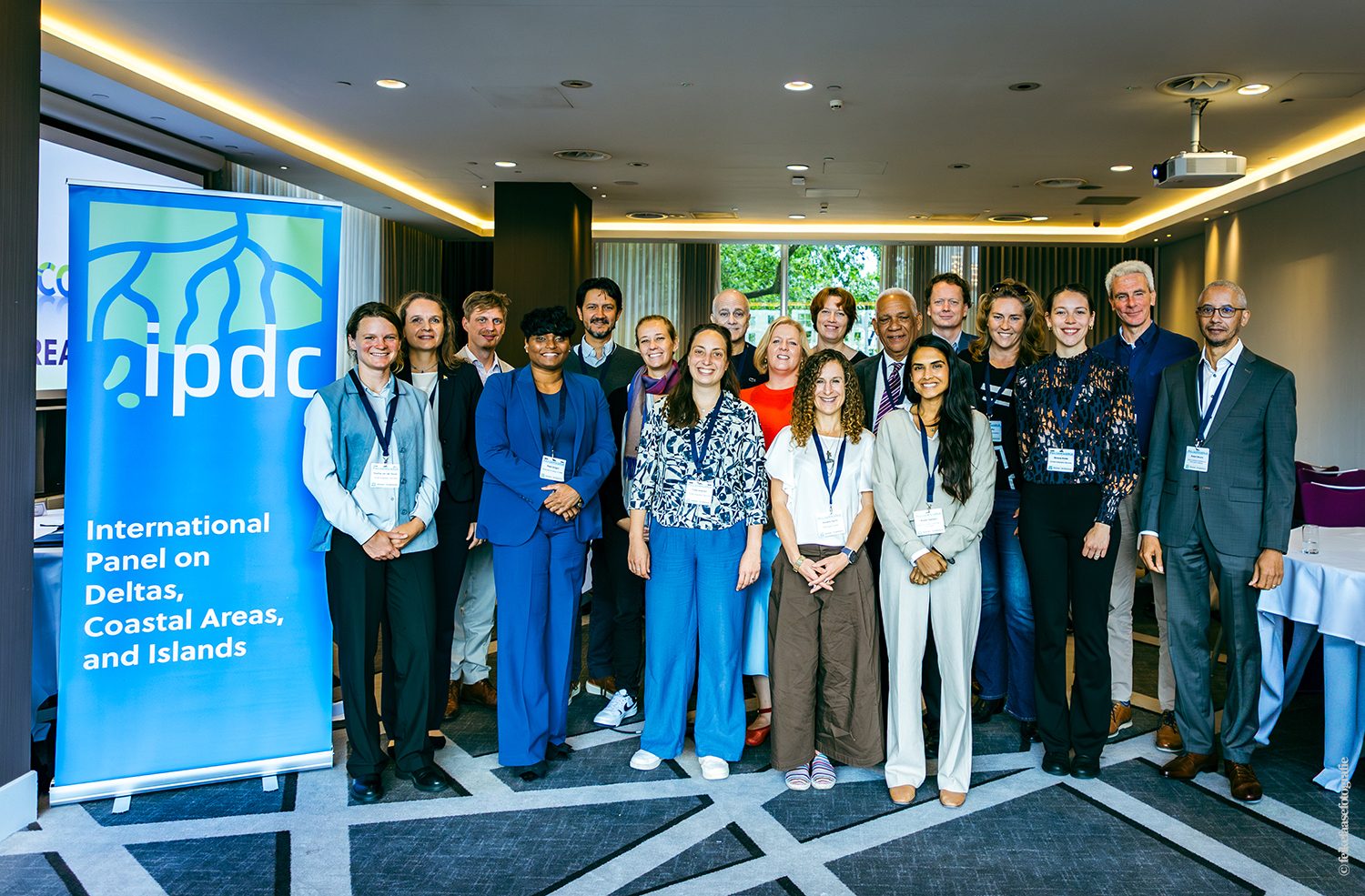
To support implementation and long-term use of the database, focus groups were held on each of the three islands during the final phase of the project. These sessions brought together representatives from government, academia, civil society, and technical organisations to reflect on the usability, relevance, and sustainability of the database in practice.
Each focus group addressed island-specific themes:
- Curaçao focused on cross-sector coordination, accessibility of knowledge, and implementation pathways.
- Aruba emphasised embedding the database within academic structures, including teaching, research, and student involvement.
- The island of St. Martin explored whole-island governance, cross-border collaboration between the Dutch and French sides, and long-term stewardship.
The discussions confirmed that the main challenge is not a lack of climate knowledge, but fragmentation, limited accessibility, and insufficient translation to decision-making and community contexts. The findings informed recommendations on governance, institutional embedding, communication, and long-term stewardship of the database.
A detailed report summarising the focus group findings is available here:
Dissemination materials
In addition to the database, the project lays the foundation for the development of dissemination materials. These materials are intended to translate selected adaptation options and insights from the database into formats suitable for communication, education, and stakeholder engagement, and are foreseen as part of follow-up IPDC-supported activities.
Partners
The project was led by Vrije Universiteit Amsterdam and co-developed in close collaboration with the University of Curaçao, the University of Aruba, the University of St. Martin, and a consortium of regional and international knowledge partners, including Wageningen University and Research, Deltares, Climate Adaptation Services, RE-Quest, and Impact Blue.
Role within the IPDC programme
This project complements earlier IPDC activities on climate scenarios and climate impact atlases for the Dutch Caribbean. Together, these initiatives provide governments and stakeholders with a coherent set of tools to support evidence-based national adaptation planning and regional exchange.